How Many Words Should Your Book Be?
One of the first things new authors ask is:
“How many words should my book be?”
And honestly?
Most writers worry about this way too early.
Not because word count doesn’t matter, it does.
But because people start obsessing over numbers before they’ve even finished Chapter 1.
The better question is:
“How long does my book need to be to tell the story or idea properly?”
That’s what actually matters.
Still, having general word count ranges helps a lot, especially if you’re self-publishing for the first time.
So here’s a practical guide without the confusing publishing jargon.
First: Don’t Panic About Word Count
Your first draft will probably:
Be too short
Or way too long
Or somehow both emotionally
That’s normal.
A book grows during editing.
You’ll add things.
Remove things.
Rewrite entire sections you thought were genius at 2AM.
Word count changes constantly.
So don’t treat early numbers like life-or-death publishing decisions.
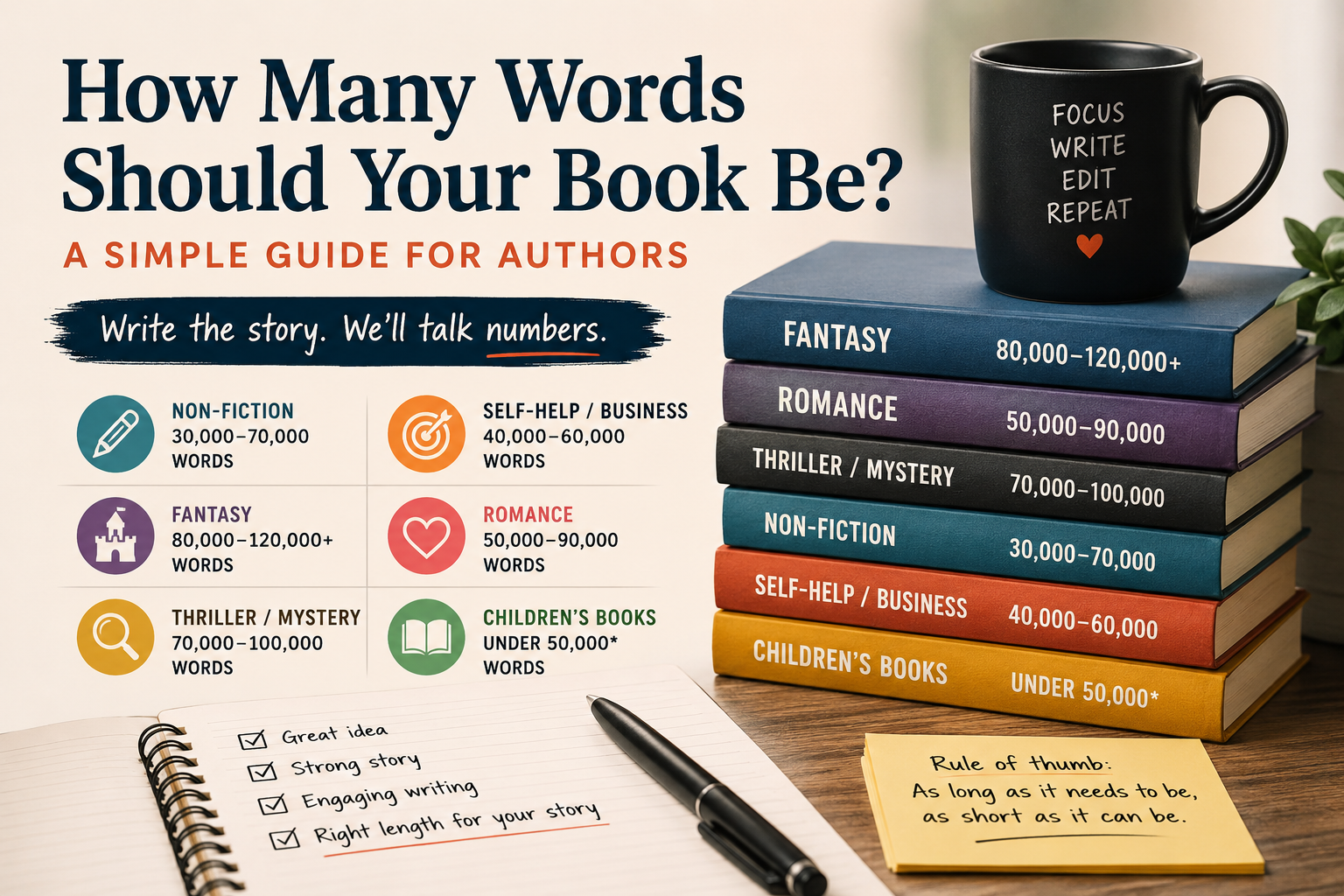
General Book Word Count Guidelines
Non-Fiction Books
Usually:
30,000–70,000 words
A lot of beginner non-fiction authors think:
“More words = more value.”
Not true.
Readers want:
Clarity
Useful information
Good pacing
Not 14 pages explaining something that could’ve been said in two paragraphs.
Shorter and helpful beats longer and exhausting.
Self-Help / Business Books
Usually:
40,000–60,000 words
Most popular self-help books are surprisingly readable and direct.
Nobody wants to feel trapped inside a motivational TED Talk for 400 pages.
Fantasy
Usually:
80,000–120,000+ words
Fantasy readers love immersive worlds.
Which means:
More characters
More lore
More world-building
Fantasy books tend to be longer naturally.
And honestly, fantasy authors seem biologically incapable of writing short books.
Romance
Usually:
50,000–90,000 words
Romance focuses heavily on pacing and emotional development.
Too short can feel rushed.
Too long can lose momentum.
Thriller / Mystery
Usually:
70,000–100,000 words
These genres rely on pacing.
Readers want:
Momentum
Suspense
“Just one more chapter” energy
Children’s Books
This varies a lot.
Picture books:
Often under 1,000 words
Middle grade:
Around 20,000–50,000 words
Kids are brutally honest readers.
If the pacing drags, they simply move on with their lives.
Here’s What Most Authors Don’t Realize
Readers rarely finish a book and think:
“Wow. Perfect word count.”
They care about:
Engagement
Clarity
Storytelling
Pacing
A shorter book that keeps people interested is far more valuable than a long book full of filler.
The Real Danger: Adding Fluff
A lot of writers stretch their books because they think longer feels “more professional.”
It usually does the opposite.
Readers can feel filler.
You know those sections where even you got bored while writing them?
Yeah.
Readers notice those too.
Short Books Are Not “Less Real”
This is important.
A shorter book is still a book.
You do not need:
150,000 words
72 chapters
An emotional support trilogy
To call yourself an author.
Some books genuinely work better shorter.
One Simple Rule to Follow
Your book should be:
As long as it needs to be
And as short as it can be
That balance matters.
If You’re Self-Publishing…
The good news is:
You have more flexibility.
Traditional publishing sometimes cares heavily about market standards.
Self-publishing gives you room to experiment more.
Just don’t:
Rush the book
Pad the book unnecessarily
A Better Goal Than Word Count
Instead of obsessing over:
“How many words should my book be?”
Focus on:
Finishing the manuscript
Improving the quality
Keeping readers engaged
Because an unfinished “perfect-length” book still isn’t published.
Final Thought
Word count matters.
But not as much as people think.
A clear, engaging, well-finished book will always matter more than hitting some magical number from a random internet article.
So stop refreshing the word counter every six minutes.
Write the book first.
When I published my debut book, Me for Myself, I thought hiring book influencers with huge followings would guarantee instant sales. I was wrong. Over the past year, I’ve invested my marketing budget into multiple influencer promotions—some were amazing, while others were incredibly disappointing. Here are the expensive lessons I learned the hard way, so you don't have to.