Things I Wish I Knew Before Hiring Book Influencers
When I published my debut book, Me for Myself, I quickly discovered a harsh truth that many indie authors face: writing the book is only half the battle. The other half is getting people to actually notice it.
Like many first-time authors, I immediately turned my attention to book influencers. The formula seemed simple enough: find an account with a large following, pay for a promotion, and watch new readers flood in.
Unfortunately, it wasn’t that simple.
Over the past year, I invested a significant portion of my marketing budget into multiple influencer promotions across platforms like Instagram and TikTok. Some were incredibly helpful. Others were deeply disappointing. A few taught me expensive lessons I wish I had known before handing over my money.
I’m writing this article not as a marketing guru, but as a fellow self-published author who has made enough mistakes to help you avoid making them too. Here is what I wish I knew before hiring book influencers.
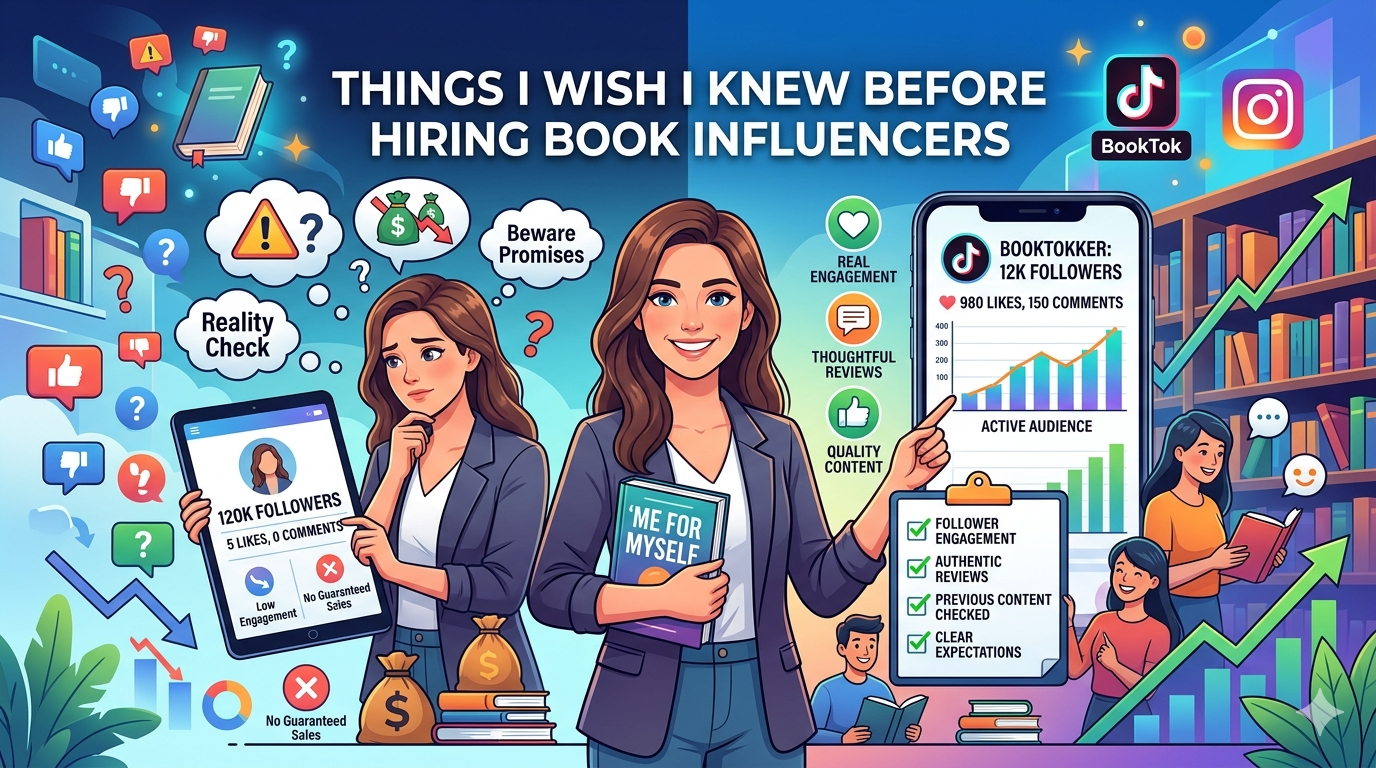
1. Follower Count is a Vanity Metric (Look at Engagement Instead)
When you’re new to the publishing world, it is incredibly easy to get dazzled by an account boasting tens of thousands of followers. You naturally assume that a massive audience automatically translates to massive exposure.
What matters far more than follower count is consistent engagement.
Many creators keep a few viral posts pinned to the top of their profile. While these pinned posts make an account look highly active and successful at first glance, they can be misleading. To get an accurate picture of an influencer's reach, you need to dig deeper:
Look past the pinned posts: Scroll down to their regular content from the last two to three months.
Check the comment section: Are people actually having conversations about books, or is the comment section empty?
Watch for consistency: Is their engagement steady, or did it drop off after a single viral video?
The Golden Rule: A micro-influencer with 5,000 highly engaged, loyal followers will almost always bring more value to your book launch than an account with 50,000 followers who rarely interact.
2. Beware of Bold Guarantees and "Bestseller" Promises
Some book influencers promise massive exposure. Others hint at significant sales spikes, making it sound as though your book is just one paid post away from becoming an overnight bestseller.
Approach anyone making these bold promises with extreme caution. The reality of book marketing is that nobody can guarantee sales. Not influencers, not Amazon ads, and not social media algorithms.
An authentic influencer knows their audience, but they also know that reading tastes are highly subjective. If a promoter guarantees a specific number of copies sold, it’s a major red flag.
3. Communication Can Change Instantly After Payment
One of the most frustrating surprises I encountered was how quickly the professional dynamic can shift once money changes hands.
Before I paid, responses were lightning-fast, friendly, and highly organized. But in a few instances, the moment the invoice was settled, the communication turned ice-cold. Replies became sluggish. I found myself sending multiple follow-ups just to find out when my book would actually be featured.
Worse yet, after waiting weeks for the content to go live, the final result was clearly rushed. A blurry photo, a generic caption, or a five-second video that looked like it took two minutes to make.
When you are spending your hard-earned, self-funded marketing budget, that is a terrible feeling. Remember: You aren't just paying for access to an audience; you are paying for creative effort, quality presentation, and professionalism.
4. Not All "Reviews" Are Created Equal
I made the mistake of assuming that hiring a book reviewer meant I would receive a thoughtful, comprehensive review.
The truth is, quality varies wildly in the indie author marketing space:
The High-Quality Creator: Genuinely reads your book, shares insightful opinions, discusses core themes, and crafts content that makes their audience genuinely curious.
The Box-Checker: Posts a picture of the cover with a summary copied straight from your Amazon book description, offering zero personal insight.
Before pitching an influencer, audit their past sponsored content. Ask yourself: “Would I be happy if my book received this exact level of treatment?” If the answer is no, keep looking.
5. Get Clear Deliverables in Writing
Never assume you know what is included in a promotion package. To protect your investment, you need to know exactly what you are paying for before any money leaves your account.
Before signing an agreement or sending a payment, ask for a clear breakdown of the deliverables:
Is it an honest review or a feature?
Will it be a dedicated video (TikTok/Reels) or a static photo post (Instagram)?
Are temporary story mentions included?
How long will the post remain live on their feed?
Final Thoughts: Influencers Are a Tool, Not a Magic Bullet
Influencer marketing is an excellent way to build social proof and author branding, but it is not a magic solution to low sales.
When promoting Me for Myself, I initially expected immediate spikes in Kindle sales and Amazon reviews after every shoutout. Sometimes I got a nice bump; other times, the needle barely moved.
A successful book marketing strategy relies on multiple small efforts working in tandem—social media presence, newsletter swaps, paid ads, and influencer outreach.
If you want to make the most of your book marketing budget, remember to do your homework:
Look beyond the follower count and analyze real engagement.
Review past sponsored posts for quality and effort.
Be skeptical of overnight success promises.
Get your deliverables clearly defined.
The best book influencer isn’t the one with the loudest voice or the biggest audience. It’s the creator whose dedicated community is most likely to fall in love with your specific story. I had to learn these lessons the hard and expensive way but hopefully, now you won’t have to.