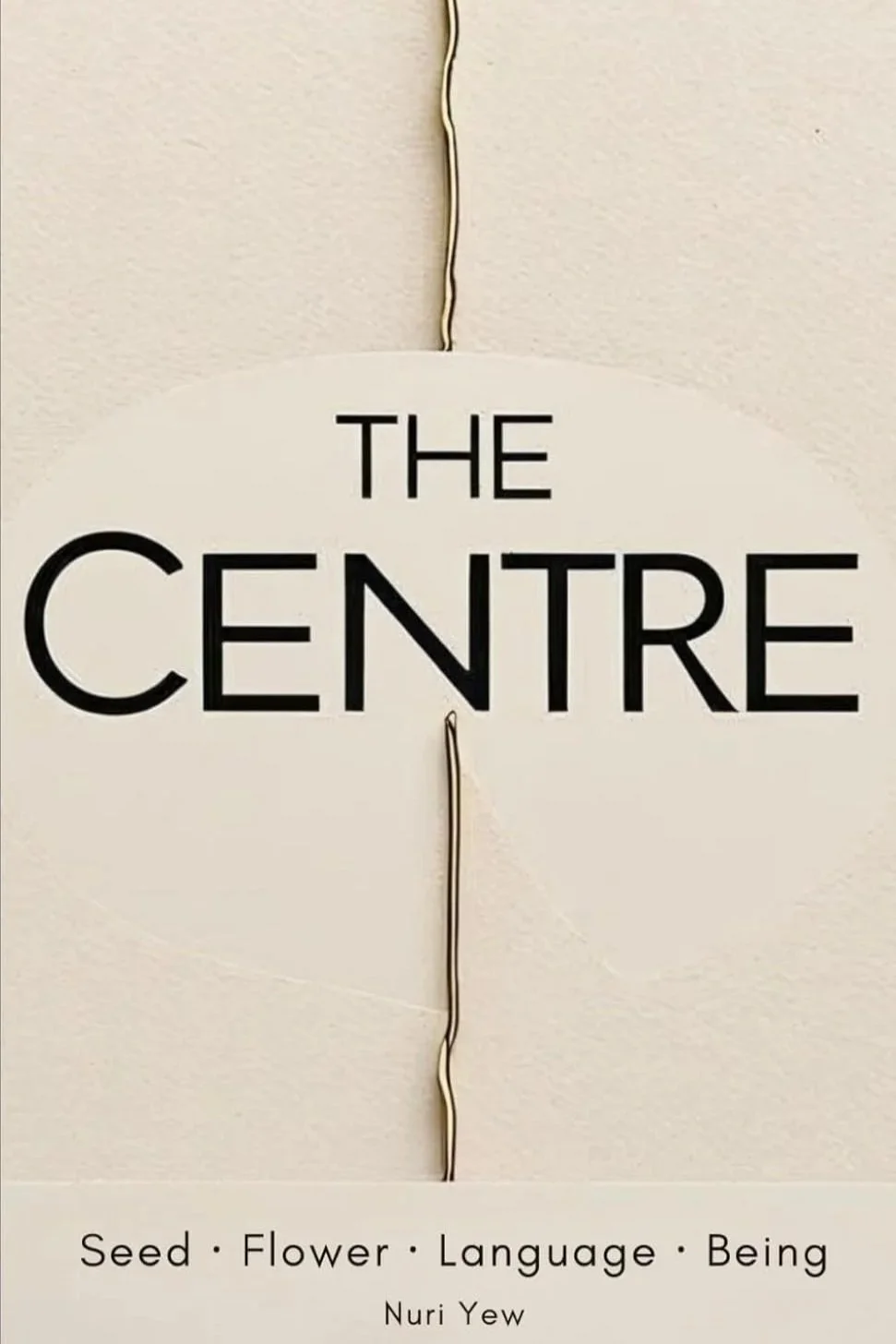
Book Review: The Centre by Nuri Yew
Rating: 4/5 ⭐
Some books are meant to be read once. Others seem to change every time you return to them. The Centre by Nuri Yew is definitely the latter.
At its heart, The Centre is a blend of poetry and philosophy, a combination that is much harder to pull off than it sounds. Philosophy is often explored through long, detailed discussions, while poetry relies on brevity and emotion. Nuri Yew manages to merge the two beautifully, creating something that feels both thought provoking and deeply personal.
What immediately stood out to me was how different this book feels from most poetry or philosophy collections. It does not feel polished into something overly familiar. Instead, it has a rawness and distinct voice that reminded me why I enjoy indie books so much. Independent books often take risks that traditional publishing sometimes smooths out, and The Centre benefits greatly from that authenticity.
Throughout the book, Yew explores different stages of life, identity, healing, suffering, growth, and self discovery. At the center of all these themes is, quite literally, "the centre" itself. It can be interpreted as the true self, the soul, the flower of life, or simply the quiet space within us where our experiences are gathered and transformed. Through themes of absorbing, holding, metabolizing, and becoming, the author presents the centre as the force that shapes who we are.
One of the first things the author suggests is keeping this book on your bedside table and revisiting it often because its meaning will change every time you read it. After finishing the book, I completely understand why.
This is not a book you rush through.
The poetry makes you want to keep reading, but the philosophy constantly makes you stop and think. I would honestly recommend reading it at least twice. The first read allows you to absorb the words, while the second gives you space to explore the deeper meanings hidden within them.
Almost every page contains a line worth highlighting. One of the earliest passages that stayed with me was:
"People do not heal from being told the truth. They heal from recognising themselves in it."
That quote alone captures much of what this book is trying to do. Rather than offering answers, it encourages recognition.
The Basket
One of my favorite sections in the book was "The Basket." Here, Yew explores the idea that our centre is constantly collecting experiences, emotions, wounds, victories, light, and darkness. Everything we absorb becomes part of us, even when we do not yet understand why.
The section contains one of my favorite lines:
"What they call fracture, you call foundation."
The idea is simple but powerful. The things we often see as broken parts of ourselves may actually become the foundation we build upon later in life.
The author continues with another powerful observation:
"The world misnames what it does not understand."
This section hit me because it is something most of us experience without really thinking about it. We spend so much time judging where we are in life based on what other people can see. But growth does not always look like growth. Sometimes it looks messy, confusing, or even painful.
Reading this part made me think about how often we mistake the process for the result. What feels like a wound today might end up being the very thing that shapes us tomorrow. Yew captures that idea beautifully when she expands on the thought:
"The world builds whole systems around the misnaming. We diagnose, describe, categorise, yet the suffering remains. Because we have mistaken naming for knowing, and knowing for healing."
What I appreciated most about this section is that it does not try to provide easy answers. Instead, it challenges the way we look at ourselves and others. Just because something appears broken does not mean it is. Just because someone is struggling does not mean they are not growing. Sometimes the things the world labels as weaknesses, failures, or fractures are actually the very experiences that shape who we become.
By this point, you are probably either ready to close this review and start reading the book yourself, or wondering what on earth I have been talking about. I think both reactions are exactly what The Centre would want from its readers.
Orbit of Being
My personal favorite section was "Orbit of Being." It contains what might be my favorite quote in the entire book:
"Those who run out of air before the depth begins call the deep ones drowning."
The moment I read it, I had to stop and reread it several times. It is one of those rare lines that feels instantly memorable. The kind of quote you highlight, save, and think about days later.
What impressed me throughout the book was Yew's ability to connect existential ideas with everyday emotional experiences. Many philosophy books can feel distant or academic, but The Centre never does. It remains deeply human throughout.
One example is the flower analogy that appears later in the book. The author suggests that even when a flower loses its petals, it is not defined by them. The petals are only one part of the flower. The roots, the soil, the water, and everything beneath the surface are equally important.
That idea felt incredibly relatable. We often define ourselves by what we have lost, whether it is opportunities, relationships, confidence, or parts of ourselves. But Yew reminds us that there is always more beneath the surface than what the world can see. The petals may fall, but the flower remains.
Final Thoughts
If you are planning to read The Centre like a typical poetry collection or a straightforward philosophy book, it may feel like a relatively short read. However, I think the best way to experience it is slowly. Read a section, put the book down, and spend some time thinking about it before moving on.
This is not a book that demands to be finished quickly. It is a book that asks to be reflected upon.
The Centre is thoughtful, poetic, and surprisingly profound. It offers ideas that linger long after the final page and rewards readers who are willing to sit with its questions rather than rush toward answers. If you enjoy philosophy, reflective poetry, or books that reveal something new each time you open them, this is one worth keeping close by and revisiting often.
Rating: 4/5 ⭐